Table of Contents
Charlotte County Courts, FL *

Formed in 1921, Charlotte County is one of the youngest counties in Florida, located on the Southwest Florida Gulf Coast between Sarasota and Fort Myers. The County also has Punta Gorda as its county seat and Charlotte Harbor, the second-largest open-water estuary in Florida and one of the state's largest natural harbors. The County's economy is anchored in tourism, healthcare, retail, and construction, with Punta Gorda Airport (PGD) as a major economic driver. The county has a population of approximately 217,000 as of 2025 and is one of Florida's fast-growing counties.
The County's Judicial system is based on Florida's unified court system and is part of the 20th Judicial Circuit. To preside over all the county's legal matters, the county operates the Circuit Court and the County Court, which enables the county court system to successfully hear both minor and major cases within the county.
Overview of the Charlotte County Court System
Charlotte County belongs to the 20th Judicial Circuit of Florida, with two trial courts: the Circuit Court, which is the court of general jurisdiction in the county and is presided over by an elected Circuit Court judge. Secondly, the County holds the County Court, which represents the court of limited jurisdiction presided over by an elected County Court Judge.
To run the day-to-day operations, the County Court system relies on the Clerk of the Circuit Court and County Comptroller, the official custodian of all the court's records, who processes all the court's filings, manages the case files, collects court fees and fines, issues summonses and writs, and maintains the court dockets for both Circuit and County Court. All the court offices are housed within the Charlotte County Justice Center in Punta Gorda.
Types of Courts in Charlotte County, Florida

For filers and Charlotte County residents interacting with the county court system, an in-depth understanding of the courts is required when filing or accessing different court records.
 Circuit Court
The Circuit Court is the highest trial court of general jurisdiction in Charlotte and part of the 20th Judicial Circuit of Florida. The Court is located within Charlotte's County Justice Center, where it presides over the following cases:
- Felony criminal cases
- Civil disputes exceeding $50,000
- Family Law
- Probate, guardianship, and trust administration
- Juvenile delinquency and dependency
- Mental-health commitments
- Injunctions for protection against violence
- Appeals from the Charlotte County Court
Cases in the Charlotte County Circuit Court are divided into administrative divisions: the Civil Division, Criminal Division, Family Division, Probate Division, and Juvenile Division. Cases are assigned to a specific judge within the relevant division through administrative orders issued by the Chief Judge of the 20th Circuit.
 County Court
This is the County's court of limited jurisdiction, the trial court responsible for presiding over the highest volume of everyday cases affecting county residents. The court operates from the Charlotte County Justice Center, where it presides over:
- Misdemeanor cases
- Civil disputes with claims under $50,000
- Small claims of up to $8,000
- Traffic infractions
- Criminal traffic offenses
- Landlord-tenant disputes
- County and municipal ordinance violations
- Preliminary hearings and first appearance for felony defendants before transfer to Circuit Court
The county courts' administrative roles are assigned to the clerk's office, which is responsible for court filings, scheduling hearings, and collecting fines and court costs, among other duties. Appeals from the County Court go to the Circuit Court.
How to Access Charlotte County Court Records

Most of Charlotte County's court records are publicly accessible, with a small percentage of case records sealed or restricted. Some of these records include juvenile case records, adoptions, mental health records, and sealed or expunged criminal records. These records are private to protect the privacy of the involved parties, such as families in adoption cases, minors in juvenile legal matters, and individual private health records that are not to be publicly accessed.
 Online Access
For publicly accessible case records, residents can access county court records through the Charlotte County Clerk of Court Case Search system, operated by the county clerk's office. From the portal, residents can access civil case dockets and case status, family law dockets, small claims case progress and final judgments, probate case dockets, traffic citations and dispositions, and eviction filings. When searching for different court case records, having the correct case number helps residents directly access the correct case record, the party's full name, the approximate case filing date, and the citation number for traffic cases.
 Alternative Online Options
Charlotte County residents can also search for court cases online through alternative platforms, such as CourtCaseFinder, when looking for cases that span beyond county borders. The platforms also help residents easily access cases where they do not have enough case identification information. This is possible because the platform aggregates case search results from different public platforms into a single search, making them easier for users to access than the county-provided platforms.
 In-Person Requests
Charlotte County residents can access county court case records by visiting the Circuit County clerk's office at the Charlotte County Justice Center, where they can view physical case files, certified case records, and archived case records. Residents are also asked to seek help from the clerk's office, as officials are familiar with the court case indexing system used to store the records. One needs to provide case identifiers such as the case number, party names, and the approximate filing dates. This information makes it easier for the clerk's office to assist residents by quickly tracing the correct case records.
 Archived Records
Residents can access the county's archived records at the Clerk's Official Records Division in the Murdock Administration Building, which holds long-term court and recording archives. The Charlotte County Historical Center in Port Charlotte preserves broader historical documents predating the digitization of the county court system, with records such as pre-incorporated municipal records, historic marriage and divorce records, original probate files predating digitization pre-2000, order criminal case dispositions, and pre-2000 civil cases. To access these archived records and more, residents can contact the Clerk's Office Records division through an email research request. However, physical retrieval and copying the records may take several business days.
For Attorneys and Legal Professionals
For an out-of-state attorney to appear in a Charlotte County case, they must file a verified motion for admission pro hac vice under Rule 1-3.10 of the Rules Regulating the Florida Bar, confirm membership in good standing of the bar of another U.S. jurisdiction, and disclose all Florida cases the attorney has appeared in within the past 365 days, with a limit of three. Then they must pay the prescribed fee of $250 to the Florida Bar, pay the separate clerk's filing fees for the motion in the Charlotte County case, associate with a Florida-licensed local counsel who will sign pleadings and accept service, and then submit the motion to the assigned 20th Judicial Circuit Judge for approval.
Another key area to flag within the Charlotte County court system is how mediation is handled, which is done through the Court Administration's Mediation/Alternative Dispute Resolution Office. It assigns Florida Supreme Court-certified mediators to cases such as divorce, parenting plans and support, county civil mediation, which covers small claims and civil cases up to $50,000, circuit civil mediation, which covers cases above $50,000, and other mediations, including dependency and foreclosure.
How to File a Case in Charlotte County

Filing cases within the Charlotte County court system is a delicate process that requires the filer's full attention to detail and knowledge of the county court system. Breaking down the case filing process into simple, executable steps reduces the likelihood of errors and, at the same time, increases the filer's attention to smaller portions of the process, thereby reducing the chance of mistakes.
Step 1: Choose the Correct Court
The county has two operating courts. The Circuit Court presides over Civil cases exceeding $50,000, Felony Criminal cases, Family Law, Probate, Juvenile matters, and Domestic violence and stalking injunctions. The County Court presides over Civil cases below $50,000, small claims of up to $8,000, misdemeanor criminal cases, traffic infractions and criminal traffic, landlord-tenant cases, and County ordinance violations. Filers need to clearly understand where their legal matter falls within the two courts before selecting the court that will preside over it.
 Step 2: Complete Required Forms
With the correct court selected, the next step is selecting and filing out the correct case forms, which can be retrieved from the Florida Supreme Court-approved Forms, the Charlotte County Clerk's self-help forms, and the Florida Courts E-Filing Portal form library, where filers can get summons, complaint, or petition forms, family law financial affidavits, and civil cover sheets, among many other forms. Filers can also access the correct case forms from the County Clerk's office at the Charlotte County Justice Center, which are provided in printed packets available at the public counter.
 Step 3: File the Case
Once all the correct case forms are filled out, the filer must file the case, which can be done either electronically (mandatory for attorneys within the country through the Florida Courts E-filing Portal) or in person at the Charlotte County Circuit Clerk's office at the Charlotte County Justice Center. Filers can also file the cases via mail addressed to the Clerk of Courts.
 Step 4: Pay Filing Fees
Filing a case in Charlotte County incurs a case filing fee, which varies depending on the type of case and the court presiding over it. To obtain the correct case filing fees, filers are advised to visit the clerk's website, where the case filing fee schedule is posted on the Court Fees page. The county also provides a court case filing fee waiver to filers who are unable to pay the required filing fees, requiring them to submit an Application for Determination of Civil Indigent Status, which the court reviews, and once approved, the filer's filing fees are waived.
 Step 5: Serve the Other Party
Once the case is filed, the defendant must be formally notified of the case against them, which is done through a process known as service of process. In Charlotte County, the process is carried out by the Charlotte County Sheriff's office, a Florida-certified private process server appointed by the Sheriff or the court, or a sheriff deputy in the county where the defendant resides. The filer cannot serve the defendant. Once the defendant is served, the Sheriff must file proof of service with the court. The filer is also advised to keep a copy of the proof of service, as it is a crucial document required by the court for the case proceedings to start.
 Step 6: Monitor the Case
With all the steps correctly implemented, the filer is now required to monitor their active case using the provided case number assigned by the clerk at filing. Monitoring can be done on the Charlotte County Clerk of Court case search portal, where the filer can monitor the defendant's responses, scheduled hearings and trial dates, filed motions and judge's rulings, discovery deadlines, orders requiring action by the filer, and final judgment or dismissal.
Charlotte County Courthouse Directory
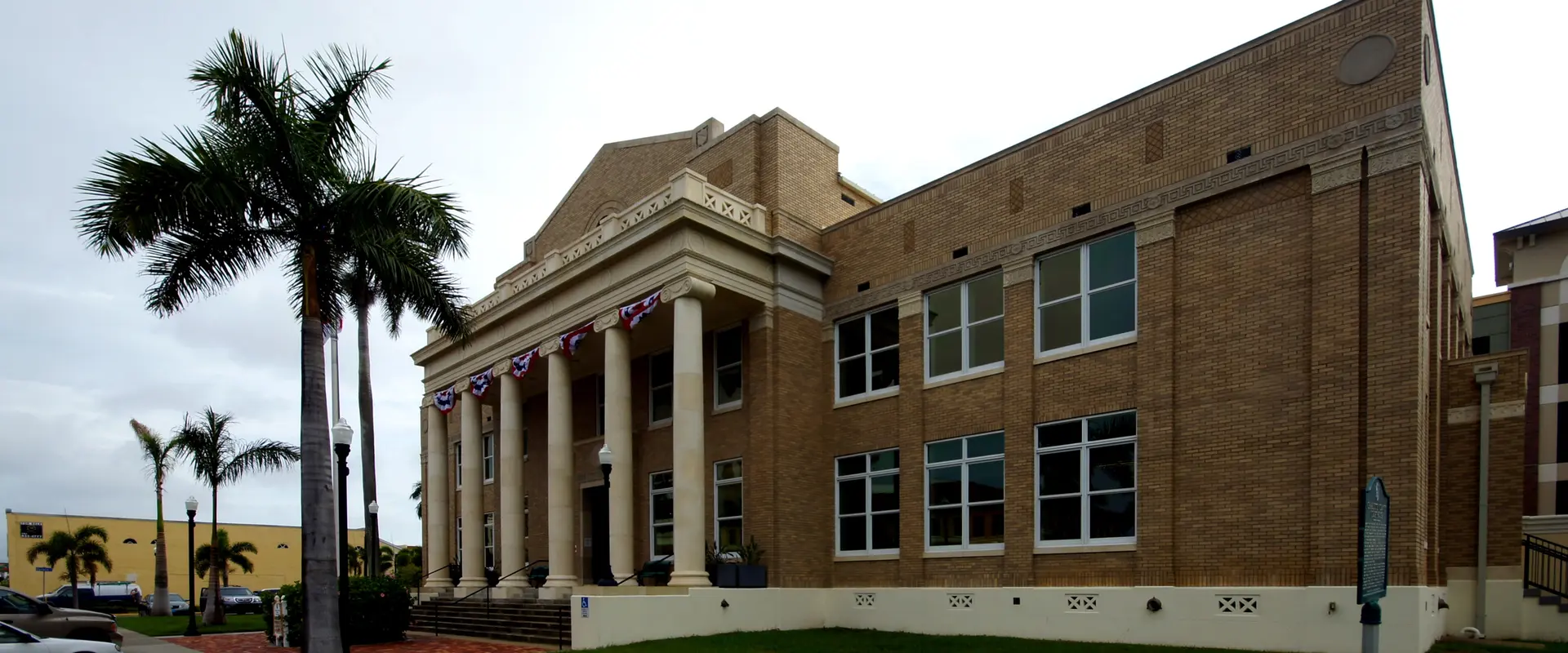
Charlotte County Justice Center
Houses both county courts, the Circuit Court and the County Court.
Punta Gorda
Address: 350 East Marion Avenue, Punta Gorda, FL 33950
Phone: (941) 637-2221
Clerk of the Circuit Court Phone: (941) 637-2199
Website: ca.cjis20.org/About-The-Court/Locations/charcounty.aspx
Legal Help and Self-Help Resources
Charlotte County residents interacting with the county court system have access to legal aid and local support from various resources, including non-profit organizations, county-supported programs, county-supported platforms, and state-provided resources, all designed to help county residents interact smoothly with the County's judicial system.
 Free Legal Assistance
One of the leading free legal aid providers in the county is the Charlotte County Legal Aid Society, which provides the residents with free 20-minute legal consultations with volunteer attorneys, self-help clinic appointments through the Charlotte County Clerk of Court, referrals to volunteer attorneys for qualifying clients, and community education. Residents also have access to the Florida Rural Legal Services (FRLC). This state-funded legal aid organization helps the county residents with services revolving around family law representation, housing and eviction defense, consumer protection cases, elder law and benefit advocacy, education law, public benefits appeals, and pro bono attorney referrals.
 Local Legal Support
For local legal support, the Charlotte County residents have access to the Center for Abuse and Rape Emergencies (CARE), which offers a wide range of services to the county residents, including emergency shelter for survivors and their children, court advocacy for protective injunctions, crisis intervention and 24-hour hotline, counseling and case management, accompaniment to court hearings, and safety planning. The County's senior residents also have access to local legal support from the Senior Connection Center and the Department of Elder Affairs SHINE Program that offers a wide range of services to the target residents, such as help with Medicare and Medicaid appeals, long-term care planing guidance, guardianship and power of attorney infomration, elder abuse reporting and advocacy, referrals to legal aid for civil disputes, and free benefit counseling (SHINE)
FAQs
How do I get a marriage license in Charlotte County?
The Charlotte County Clerk of the Circuit Court issues marriage licenses in Charlotte County. Both applicants must appear together at the Justice Center in Punta Gorda or at the Murdock Administration Building in Port Charlotte, each with a valid photo ID and Social Security number. Florida residents face a three-day waiting period unless they complete a state-approved premarital preparation course, which also reduces the license fee.
How do I pay a Charlotte County traffic ticket?
Charlotte County traffic citations can be paid online through the Clerk's payment portal, by mail to the Clerk at 350 East Marion Avenue in Punta Gorda, or in person at the Justice Center counter. Drivers who want to keep points off their record may instead elect a state-approved Basic Driver Improvement course within 30 days of the citation date, which is reported back to the Clerk on completion.
How do I get a record sealed or expunged in Charlotte County?
The process starts with applying for a Certificate of Eligibility from the Florida Department of Law Enforcement, which determines whether a record qualifies under Florida Statutes 943.0585 and 943.059. Once approved, a petition is filed with the Charlotte County Clerk and reviewed by a Circuit Court judge. Approved sealings remove the record from most public databases, though law enforcement retains access.
How can I check whether someone has been arrested or has an active case in Charlotte County?
The Charlotte County Sheriff's Office inmate search shows current bookings, while the Clerk's case search lists filed criminal cases. For broader searches that pull together arrests, civil filings, and case histories across multiple Florida counties, aggregated platforms like CourtCaseFinder are useful when the person may have records in more than one jurisdiction.
What should I do if I receive a jury summons in Charlotte County?
A Charlotte County jury summons requires a response, either by reporting on the listed date or by requesting a postponement or exemption through the Clerk's Jury Services portal. Accepted exemption reasons include being over 70, having served on a jury within the past year, having certain medical conditions, or being a full-time student. Jurors report to the Justice Center in Punta Gorda, and Florida law protects them from employer retaliation.
Other Counties in Florida
- Alachua
- Baker
- Bay
- Bradford
- Brevard
- Broward
- Calhoun
- Citrus
- Clay
- Collier
- Columbia
- De Soto
- Dixie
- Duval
- Escambia
- Flagler
- Franklin
- Gadsden
- Gilchrist
- Glades
- Gulf
- Hamilton
- Hardee
- Hendry
- Hernando
- Highlands
- Hillsborough
- Holmes
- Indian River
- Jackson
- Jefferson
- Lafayette
- Lake
- Lee
- Leon
- Levy
- Liberty
- Madison
- Manatee
- Marion
- Martin
- Miami-Dade
- Monroe
- Nassau
- Okaloosa
- Okeechobee
- Orange
- Osceola
- Palm Beach
- Pasco
- Pinellas
- Polk
- Putnam
- Saint Johns
- Saint Lucie
- Santa Rosa
- Sarasota
- Seminole
- Sumter
- Suwannee
- Taylor
- Union
- Volusia
- Wakulla
- Walton
- Washington
Table of Contents