Table of Contents
Citrus County Courts, FL *

Carved from Hernando County in 1887, Citrus County became the youngest entrant in Florida's Fifth Judicial Circuit. The county possesses considerable legal significance in the region, dating back to the completion of the old Citrus County Courthouse in Inverness in 1912. Following the construction of the courthouse, residents no longer had to travel miles to seek legal services. In the late 70s, the new Citrus County Courthouse replaced the 1912 courthouse as the county's primary location for legal operations.
The Citrus County Courthouse houses the Circuit and County Courts, each with several distinct divisions. These court divisions handle civil, probate, small claims, family law, misdemeanor, and even juvenile matters. The building annex also has a full-service counter where residents can access court records and receive other legal services under one roof.
Overview of the Citrus County Court System
Citrus County courts operate under Florida's unified court system in the Fifth Judicial Circuit. This statewide court structure comprises four judicial levels. It includes a Supreme Court, six District Courts of Appeal, twenty Judicial Circuit Courts, and sixty-four County Courts.
All courts under this unified system follow standardized procedural rules. For example, whether requesting court records or filing a case, the procedure is the same in all Florida counties, including Citrus County.
Citrus County has a Circuit Court and a County Court, all housed in the modern Citrus County Courthouse in Inverness. These courts have several divisions, including criminal and civil courts, as well as juvenile and family divisions. They handle a range of cases, from criminal felonies to minor civil disputes and traffic violations. The main courthouse also hosts the Clerk's Office, where residents can go to access court records for research, case management, and other legal purposes.
Types of Courts in Citrus County, Florida

Citrus County has two trial courts, each with different responsibilities. Within the courts department, there are several divisions that manage a range of cases, from misdemeanors and felonies to civil lawsuits and landlord-tenant disputes. When searching for court records or filing a petition, knowing which court handles what case can help prevent frustrating delays and provide more accurate results for a smoother legal process.
 Circuit Court
The Citrus County Circuit Court is the county's primary court and has general jurisdiction over serious legal matters.
Primary Location: Citrus County Courthouse
Jurisdiction includes:
- Criminal felonies
- Probate cases
- Civil suits
- Juvenile issues
- Family law matters
- Mental health
- Appeals from County Court
The 5th Judicial Circuit Court in Citrus County hears serious and complex legal matters, such as criminal charges, high-value civil cases (exceeding $50,000), and probate matters. Most offenses handled here are punishable by fine, probation, or imprisonment. Litigants unhappy with decisions made by the Citrus County Court can appeal to the Circuit Court. However, this court reviews only some appeals assigned to it by parties from the lower court.
 County Court
Located at the Citrus County Courthouse, the Citrus County Court handles the highest volume of cases in the county.
Jurisdiction includes:
- Civil cases not exceeding $50,000
- Small claims
- Traffic violations
- Misdemeanors
- Certified questions to the District Court of Appeal
Under Florida's unified court system, each of the 67 counties must have a County Court. The Citrus County Court has limited jurisdiction and handles non-jury trials heard by a judge. Given the nature of the cases processed here, the judge may impose a fine, community service, or short-term imprisonment on offenders found guilty.
How to Access Citrus County Court Records

Most court records in Citrus County remain open to the public. Anyone interested in a particular case can access these records to help them manage their legal matters. However, a court or judge may restrict or seal certain records, making them inaccessible. Court records involving minors, mental health, witness protection, and even family law are often confidential. Only parties involved in the case have access to these sealed or restricted records.
Knowing how to access Citrus County court records can help interested parties resolve their legal issues swiftly, saving time and resources. Citrus County residents can obtain non-confidential court records through an online search, in-person request, or by mail. Here is a breakdown of how to access Citrus County court records:
 Online Access
One of the most efficient ways to access Citrus County court records is through an online search. Citrus County courts run and maintain a Secured Courts Online Record Search System that provides electronic court records from across the state. Users can search for specific court records by party name, company name, case number, or even citation number. For more accurate results, one should provide the court type or case details when searching online.
Since courts do not update records in real time, some records may be unavailable. The good news is that searchers can submit a records request to the clerk through the public records request portal. Requestors should provide as much information as possible to obtain accurate results. While viewing electronic court records is free, charges may apply for online records requests.
 Alternative Online Options
Dealing with official state portals can sometimes be challenging, especially if one doesn't know much detail about the record they are searching for. Alternative third-party platforms, such as CourtCaseFinder, can be a solution to this issue. This site aggregates data from various courts across the state into a single database for easy access. Web users can look up civil, criminal, probate, and even traffic records through this platform.
 In-Person Requests
Some court records might not be readily available online. If this is the case, an in-person request is the surest way of obtaining these records. Litigants can access these records by visiting the Clerk's Office in person. These requests are usually necessary for certified copies, physical records, and archived court records. Requesters should provide as much information as possible, such as the party name, case number, or citation number, to streamline the process. They may also need to complete a few forms and pay a small fee for copying, printing, or certification.
 Archived Records
Old or historical court records are usually in hard copy. Moreover, Citrus County courts usually retain court records for a specified period before archiving or destroying them. Researchers, investigators, and even attorneys can access archival records through the State Archives of Florida. Alternatively, requestors can visit the appropriate local clerk for help with locating archived records. Given the nature of the search, a retrieval fee may apply.
Different circumstances call for different methods of accessing court records. While online searches are more efficient, in-person requests ensure clarity and authenticity. Combining all these methods can provide more accurate results when searching for court records.
For Attorneys and Legal Professionals
Citrus County courts provide the Secured Courts Online Record Search System for court records searches. Since this system is available statewide, attorneys from outside Citrus County but based in Florida shouldn't face any challenges accessing the portal. Out-of-state lawyers may have to familiarize themselves with how the Florida court system works to manage their legal matters effectively.
Attorneys and legal professionals who want to access bulk court records for research, filings, dispositions, or case management can utilize the Citrus County Clerk of the Court portal. This site allows attorneys to request relevant information based on case type, charges, or dockets.
How to File a Case in Citrus County

Whether filing as an attorney or a self-represented litigant, filing a case requires careful attention to detail. Any slight mistake can cause delays or dismissals. Understanding the steps involved can help save time and streamline the filing process.
Step 1: Choose the Correct Court
Before filing, one should confirm the court that will handle their case. Filing in the incorrect court can cause frustrating delays or even a dismissal. Citrus County has two trial courts, each having its own responsibilities. The Circuit Court hears felony cases, civil disputes, probate matters, and juvenile cases, while the County Court handles less serious offenses, such as non-criminal traffic violations, small claims, and misdemeanors.
 Step 2: Complete the Required Forms
The Citrus County Circuit Clerk provides standardized legal forms for a number of different cases. Applicants can also go to the Florida Courts Help website to look for specific forms. While the forms have detailed instructions and filing requirements, filers can ask the Court Clerk for procedural guidelines.
 Step 3: File the Case
Citrus County courts encourage electronic filing through the Florida ePortal platform. Attorneys, mediators, court reporters, and even health professionals can register and use the E-Filing Portal to submit their documents to the Court Clerk. While E-filing is mandatory for attorneys, self-represented individuals can file in person at the appropriate Clerk's Office.
 Step 4: Pay Filing Fees
While filing a case through the Florida ePortal is free, it carries a statutory filing fee. The base filing fees vary by court and case type. Aside from the filing fees, filers may have to pay associated service charges and processing charges. For filers who may struggle to pay the fees, they may submit an Application for Determination of Civil Indigent Status to the court clerk.
 Step 5: Serve the Other Party
A case cannot proceed without "service of process." The complainant must notify the defendant about the lawsuit by serving them with legal papers. The petitioner can serve the respondent through the local sheriff's office, a professional process server, or by certified mail. After serving the other party, the server must complete an affidavit and file it with the court as proof of service.
 Step 6: Monitor the Case
Parties involved in a case should track the proceedings to avoid missing scheduled hearings, motions, and other updates. One can track their case through third-party platforms or by consulting the appropriate court clerk. The clerk should be able to provide relevant information (not legal advice) to help litigants with case management.
Citrus County Courthouse Directory
Knowing exact court locations can be helpful when searching for court records or seeking legal redress. It helps save time and prevent unnecessary expenses, moving from one court to the next. Here are the key legal locations in Citrus County:
Citrus County Courthouse (Circuit and County Courts)
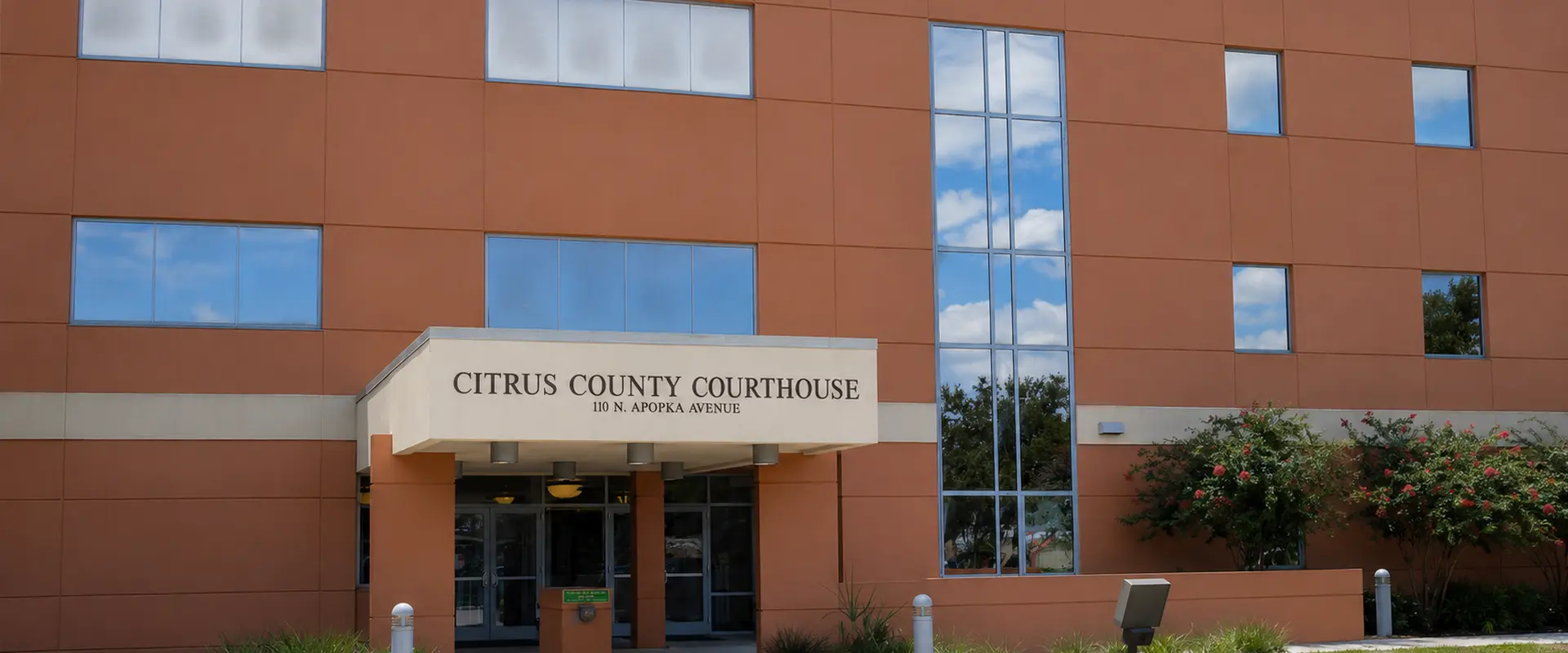
The Citrus County Courthouse is the primary location for all legal operations in the county. This multi-story building houses the Circuit and County Courts. It also hosts the Clerk's and Comptroller's Offices.
Inverness
Address: 110 North Apopka Avenue, Inverness, FL 34450
Phone: (352)-341-6424
Website: Citrus County Courthouse
Citrus County has two trial courts, all housed in the same courthouse, providing residents with professional legal services under one roof. Whether searching for court records or filing a case, litigants should confirm the court's business hours to avoid disappointment.
Legal Help and Self-Help Resources
Several local and state resources are available for self-represented parties and low-income individuals seeking legal help in Citrus County. Some law firms and nonprofit organizations also provide pro bono legal services to individuals who cannot afford a private attorney.
 Free Legal Assistance
The Community Legal Services of Mid-Florida is the primary provider of free legal assistance to families in Citrus County and the surrounding Central Florida area. The organization offers no-cost legal help with divorce cases, housing issues, family law, and consumer disputes.
Under Florida statutes, the Court Clerk should provide procedural guidance to ensure self-represented parties can access the information they need to handle their legal matter. While clerks give guidelines, they do not provide legal advice. Litigants can only obtain relevant forms and procedural instructions from the clerk.
Citrus County Courts also have a free mobile app that provides legal help for self-represented parties. The app covers family law cases and includes links to lawyer referrals, low-cost legal services, and help centers throughout Florida.
 Local Legal Support
Attending local legal clinics is an excellent opportunity for litigants to speak to a lawyer and get free legal support. Organizations like St. Michael's Legal Center provide pro bono consultations for low-income families and self-represented individuals in Citrus County. Their practice areas cover family law, child support, guardianship, probate matters, and immigration, among others.
FAQs
What is the retention period for court records in Citrus County?
The retention period for court records varies depending on the case. Retention schedules for traffic violations are about 60 days, while felony cases have a retention period of up to 50 years upon conviction. Small claims cases have a two-year retention period, while most civil records stay in the database for up to 10 years.
What is the difference between sealed and expunged court records?
A judge has the power to seal or expunge court records. Sealed records are confidential court records that are hidden from the public because they involve minors, trade secrets, or sensitive information. In contrast, expunged records are court records that have been erased from the system. Eligible applicants can apply for expungement to have their records erased.
How often are court records updated in Citrus County?
Most Citrus County courts do not update court records in real time. Reporting schedules vary depending on the type of case and the court. The schedule can be daily or weekly. However, the Clerk of the Circuit Court, who is the custodian of all court records, undertakes to process and update court records at the earliest opportunity.
Are third-party record finders always accurate?
Most credible third-party record finders, such as CourtCaseFinder, deliver instant results. These sites allow one to search for court records by name, location, or even phone number. The accuracy of the results depends on the details provided. Requestors should provide information such as party name, case number, business name, or citation number to obtain more accurate results.
What do I do if I can't find my case online?
If one cannot find their case online, they may have entered the incorrect party name, case number, or court type. The case may fall under a different category, which explains why it is unavailable. Sometimes, the courts take time to update case information and court records. Litigants should check back later for updated case information or court records.
How long does it take to get court records in Citrus County?
The time required to access and obtain court records depends on the method used. Online searches are the most efficient as they deliver near-instant results. For in-person requests, the applicant must visit the clerk's office to locate the desired records. Processing the request might take a few hours to a few business days.
Can I save or download court records online?
Anyone can save or download court records from the Secured Courts Online Record Search System. This platform allows requesters to view and download court records by name, case number, or even court type. For certified copies and documents, one has to submit a request to the appropriate clerk via the Clerk E-Certify Services platform.
Which court records are confidential?
Not all court records are open to the public. A judge may seal court records involving minors and protected victims. Adoption, mental health, and certain family law records are also unavailable for public viewing. For security reasons, the court may restrict access to records and files for ongoing criminal investigations.
Other Counties in Florida
- Alachua
- Baker
- Bay
- Bradford
- Brevard
- Broward
- Calhoun
- Charlotte
- Clay
- Collier
- Columbia
- De Soto
- Dixie
- Duval
- Escambia
- Flagler
- Franklin
- Gadsden
- Gilchrist
- Glades
- Gulf
- Hamilton
- Hardee
- Hendry
- Hernando
- Highlands
- Hillsborough
- Holmes
- Indian River
- Jackson
- Jefferson
- Lafayette
- Lake
- Lee
- Leon
- Levy
- Liberty
- Madison
- Manatee
- Marion
- Martin
- Miami-Dade
- Monroe
- Nassau
- Okaloosa
- Okeechobee
- Orange
- Osceola
- Palm Beach
- Pasco
- Pinellas
- Polk
- Putnam
- Saint Johns
- Saint Lucie
- Santa Rosa
- Sarasota
- Seminole
- Sumter
- Suwannee
- Taylor
- Union
- Volusia
- Wakulla
- Walton
- Washington
Table of Contents