Table of Contents
Highlands County Courts, FL *

Partitioned from DeSoto County in 1921, Highlands County is one of the youngest counties in Florida. It is located in the heart of Florida, with Sebring serving as the county seat. The county has an estimated population of over 111,000 residents as of 2025.
With Highlands County's population surging modestly, legal issues are bound to arise. The good news is that the county has an established court structure that is more than capable of handling a range of legal matters. These courts hear and decide numerous legal issues, including misdemeanor and felony criminal cases, family law matters, civil disputes, and even traffic offenses. Residents can seek the courts for dispute resolution, access to records, and case filings.
Overview of the Highlands County Court System
Highlands County courts are part of Florida's Unified Judicial System. This structure consists of four tiers of courts, ranging from the state Supreme Court to the local County Court. The county has a regional Circuit Court and a statutory County Court, both located in the Highlands County Courthouse in Sebring.
The Circuit Court handles major legal hearings and has general jurisdiction over felony charges, major civil disputes, probate matters, and family law cases. At the local level is the County Court, sometimes called the "People's Court." This trial court has limited jurisdiction, presiding over misdemeanors, traffic violations, small claims, and minor civil actions.
Types of Courts in Highlands County, Florida

Highlands County has a Circuit Court and a County Court, where attorneys and residents file cases, access records, and resolve legal matters.
 Circuit Court
The Circuit Court is the county's trial court of general jurisdiction. As the county's highest court, it handles major legal matters, some of which are punishable by a prison sentence.
Primary location: Highlands County Courthouse
Cases include:
- Felonies
- Major civil cases (typically over $50,000)
- Family law matters
- Juvenile delinquency and dependency
- Probate, guardianship, and estate matters
- Reviews from County Court rulings
The Circuit Court is part of the 10th Judicial Circuit, serving Highlands, Hardee, and Polk Counties. This regional court handles complex litigation matters and has several judges assigned to each county's court, who hear specific cases, ranging from probate, juvenile, and major civil cases to felony criminal charges and family law matters. Given its legal authority as the county's highest court, it also reviews rulings from the local County Court.
 County Court
The County Court in Highlands County is the first entry point for residents into the Florida Justice system. Like the Circuit Court, this trial court operates from the Highlands County Courthouse in Sebring.
Typical cases include:
- Minor misdemeanors
- Civil disputes (typically under $50,000)
- Small claims (under $8,000)
- Landlord-tenant disputes
- Traffic offenses
- City ordinance violations
Like in all Florida counties, Highlands County has a statutory County Court that works at the local level. It handles minor legal hearings that are punishable by a fine or a prison sentence that doesn't exceed one year. Given that Florida has no Municipal Courts, the County Court handles traffic infractions and city ordinance violations.
How to Access Highlands County Court Records

The majority of Highlands County court records are available for public viewing. The courts follow the Florida Sunshine and Public Records Laws that give citizens the right to access government and public records, including court records. However, there are some exceptions for sensitive matters. The court may seal or restrict certain records, including juvenile records to protect minor identities, criminal records under ongoing investigation, adoption files, and mental health proceedings to protect patient privacy.
 Online Access
The fastest way to access court records in Highlands County is through online platforms. The county-provided Online Court Records Search portal gives residents access to non-confidential court records. One can search anonymously or as a registered user by case number, party name, or citation number. Searchers can also view case status, docket entries, and filings. The best part is that online access and viewing are free, and one can print out the documents for future reference. For electronically certified records, applicants can file a request through the clerk's E-certify portal. Recording and certification fees may apply for this service.
 Alternative Online Options
State-provided portals can sometimes be cumbersome, especially for first-time users. Highlands County residents can use alternative platforms to access public court records. Sites like CourtCaseFinder aggregate data from different courts into a single repository for swift and easy access. Requesters can search for court records by case number, party name, location, email address, or even phone number. One can filter results by county or state for precise results.
 In-Person Requests
Highlands County residents can visit the Clerk of Courts in person at the main courthouse to access physical records and certified copies. This option is beneficial as it allows for direct assistance from the clerk and support staff in locating court records. Obtaining standard copies and certified records may incur some costs. Additional labor fees may apply if the staff must conduct an extensive search.
 Archived Records
Accessing pre-digital and archival court records requires an in-person visit to the Clerk of Courts. The clerk may charge a fee for copying and certification based on the official fee schedule. Highland County residents can also visit the State Library and Archives of Florida to access archived records. The department maintains inactive court records that may be used for legal research, investigative journalism, case reviews, and academic purposes.
Combining online searches, in-person requests, and third-party finders is a reliable approach to finding and accessing court records in Highlands County.
For Attorneys and Legal Professionals
Out-of-county attorneys may practice in Highlands County, as long as they are licensed in Florida. However, they must follow local administrative rules when managing legal matters. Out-of-state attorneys not licensed in Florida must file a Motion for Pro Hac Vice Admission and pay the requisite fee to appear in specific cases. A local counsel, who is a Florida Bar member, may write a motion to the court on behalf of the out-of-state attorney for approval by the presiding judge to appear in the pending case.
Attorneys and legal attorneys may want to access court records for various reasons. Whatever the case, they'll discover that access to Highlands County court records is through the county-provided Online Court Records Search portal. The site gives attorneys of record direct access to case files, filings, and docket entries. Nevertheless, one needs to register and obtain a user ID and password to log in to the portal.
How to File a Case in Highlands County

Filing a case in Highlands County is a delicate, procedural matter. Filers need to stay focused and pay keen attention to detail to avoid mistakes. It boils down to choosing the correct court, completing the necessary forms, and paying filing fees.
Step 1: Choose the Correct Court
Case filing should be with the correct court to prevent frustrating delays or possible dismissals. The good news is that Highlands County has two trial courts, so understanding which court handles what case shouldn't be a problem. The Circuit Court deals with serious criminal charges, major civil disputes, probate matters, and juvenile cases. Meanwhile, the County Court handles minor legal issues, such as small claims, traffic offenses, evictions, and city ordinance violations.
 Step 2: Complete Required Forms
Filling out the correct case forms is the next step. Highlands County courts provide various standardized forms and templates for case filings. The forms are accessible in person through the Clerk of Courts or via the clerk's official website. The clerk provides legal forms and procedural guidelines for completing the paperwork in the correct format.
 Step 3: File the Case
Filing a case can be done electronically through the Florida Courts E-Filing portal or in person at the Clerk of Courts counter. Electronic filing is mandatory for attorneys in all cases, while self-represented litigants can do so in person by submitting documents to the Clerk of Courts. To file electronically, filers must create an account with the E-Filing system and then select a user role, case type, and court before uploading their documents. For in-person filings, filers must visit the Clerk of Courts with their documents and accompanying files.
 Step 4: Pay Filing Fees
For a case to proceed, one must pay filing fees. The precise amounts vary by case type and court, but the Clerk of Courts provides a fee schedule for filing in Highlands County. Accepted payment methods include cash, check, or credit card. If one is unable to pay these fees, they can apply for a waiver by completing the Application for Civil Indigent Status form. When approved, the court will waive all filing fees, allowing the case to proceed.
 Step 5: Serve the Other Party
The opposing party must be legally notified through service of process. This involves serving the other party with legal papers by an individual with no interest in the case. Service of process not only notifies the defendant but also gives them time to respond. Depending on the case, the process can be done by a certified process server or the local sheriff. If the opposing party consents, they can be served via certified mail. Whatever the case, the server must file an affidavit with the court as proof of service.
 Step 6: Monitor the Case
Since Highlands County courts handle numerous cases, they can sometimes be overwhelmed with heavy caseloads. Some courts might change their hearing dates and schedules, making case tracking a critical step. Attorneys and litigants can track cases through the county-provided Online Court Records Search portal, Clerk of Courts, or any trusted third-party platform. Courts in Highlands County also have an E-notify system that alerts parties on status updates, upcoming hearings, and other court events via text or email. Parties should register and provide the case number, name, or citation number to stay updated.
Highlands County Courthouse Directory
Highlands County Courthouse
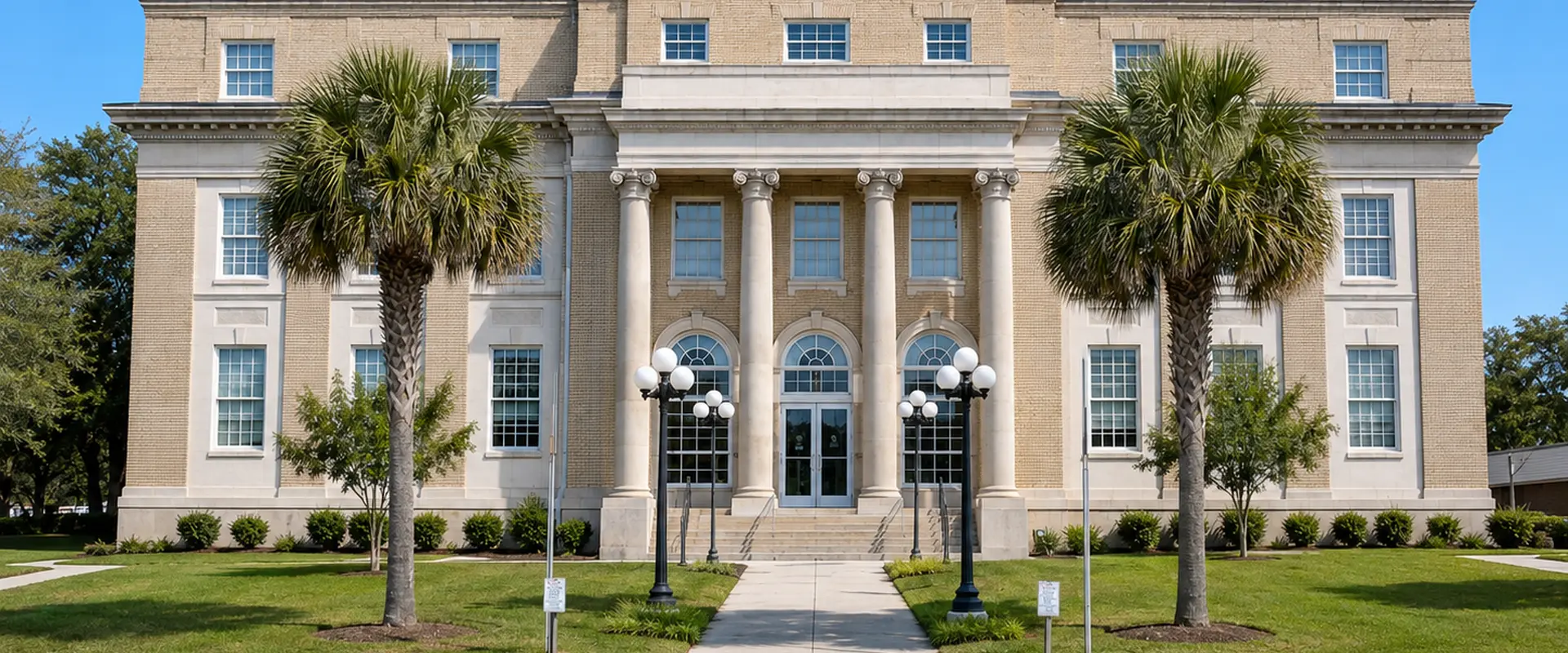
Serves as the centralized location for all legal matters, including court hearings, records access, and filings. This multi-level building houses the Circuit and County Courts. It is also where clerical offices operate from, allowing attorneys and litigants to access professional legal services.
Sebring
Address: 430 S. Commerce Avenue, Sebring, FL 33870
Phone: (863) 402-6565
Email: clerk@highlandsclerkfl.gov
Website: Highlands County Courthouse
Legal Help and Self-Help Resources
There are a number of organizations in Highlands County that offer free legal assistance to veterans, seniors, indigent citizens, and low-income families throughout the region. Anyone in need of legal aid can consult these resources to help them tackle all sorts of legal issues and experience a smooth process.
 Free Legal Assistance
Highlands County residents can access free legal assistance through nonprofit organizations like Florida Rural Legal Services (FRLS) and the Heart of Florida Legal Aid Society. These nonprofits serve low-income individuals and families. Their practice areas include family law, domestic violence, housing disputes, immigration, and consumer rights. Applicants must provide information about their income and case details to determine eligibility.
Self-represented litigants can also turn to the Clerk of Courts for legal assistance. Not to be mistaken with legal advice, the Clerk of Courts offers legal forms and procedural guidance to help individuals handle their legal matters. The clerk and support staff inform parties where to file their cases, access records, and the correct courts to resolve their issues.
 Local Legal Support
Highlands County courts offer a number of self-help resources to assist individuals who cannot afford a private attorney in managing various legal issues. These resources have guided forms and instructions, lawyer referral services, and answers to procedural questions. Litigants can also refer to the county's law library for legal research and information. In addition to these resources, residents should not hesitate to look out for and attend legal clinics hosted by various law firms in and around Highlands County.
FAQs
Does it cost money to access court records in Highlands County?
Viewing court records online through the county-provided Online Court Records Search portal is 100% free. Users can also download and print these records from the portal at no cost. However, obtaining physical records and certified copies from the Clerk of Courts in person costs money. Current rates are $1 per page for physical records and $2 per page for certified copies.
Where does one go for in-person record searches in Highlands County?
For in-person record searches, requesters must visit the Clerk of Courts stationed at the Highlands County Courthouse. The clerk and the supporting staff can help locate non-confidential court records upon request. While viewing the records through the public computer or at the counter is free, charges may apply for certification, reproduction, and extensive searches.
How do out-of-county attorneys access records in Highlands County?
As long as one is a Florida-licensed attorney, they can access court records in Highlands County through the Online Court Records Search portal or the Florida E-Filing System. Out-of-state attorneys not licensed in Florida must file a Motion for Pro Hac Vice Admission and pay the requisite fee to access certain records and appear in specific cases.
Can one request court records by mail?
Yes. Mail requests are acceptable in Highlands County courts. Requesters can send a written request with case details, such as the case number and party name, and payment to the Clerk of Courts. Certified copies can be mailed back to the applicant. However, the requester should include a self-addressed, stamped envelope to receive the records.
What happens if court records are archived?
The Clerk is the custodian of all court records, including archived copies. Accessing pre-digital and archival court records requires an in-person visit to the Clerk of Courts. The clerk may charge a fee for copying and certification based on the official fee schedule. Alternatively, Highland County residents have access to archived records through the State Library and Archives of Florida.
Are third-party record finders always accurate?
The accuracy of third-party court record finders like CourtCaseFinder depends on several factors. These sites provide results from available data, meaning some records might be unavailable since not all courts report in real time. CourtCaseFinder pulls information from updated court data from different jurisdictions. The site is for legal use only, meaning one cannot use it to conduct tenant screening or perform employment or background checks.
Why is e-filing mandatory for attorneys in Highlands County?
E-filing is mandatory for attorneys in Highlands County, following orders from the Florida Supreme Court. These sweeping procedural changes are aimed at modernizing the court system, reducing operational and filing costs, and improving efficiency. Since 2013, lawyers must submit filings electronically through the statewide e-Filing Portal instead of paper. Self-represented litigants are exempt from this mandate.
Other Counties in Florida
- Alachua
- Baker
- Bay
- Bradford
- Brevard
- Broward
- Calhoun
- Charlotte
- Citrus
- Clay
- Collier
- Columbia
- De Soto
- Dixie
- Duval
- Escambia
- Flagler
- Franklin
- Gadsden
- Gilchrist
- Glades
- Gulf
- Hamilton
- Hardee
- Hendry
- Hernando
- Hillsborough
- Holmes
- Indian River
- Jackson
- Jefferson
- Lafayette
- Lake
- Lee
- Leon
- Levy
- Liberty
- Madison
- Manatee
- Marion
- Martin
- Miami-Dade
- Monroe
- Nassau
- Okaloosa
- Okeechobee
- Orange
- Osceola
- Palm Beach
- Pasco
- Pinellas
- Polk
- Putnam
- Saint Johns
- Saint Lucie
- Santa Rosa
- Sarasota
- Seminole
- Sumter
- Suwannee
- Taylor
- Union
- Volusia
- Wakulla
- Walton
- Washington
Table of Contents